
GRAND MANAN is the largest island along the coast of Maine, eight miles off West Quoddy Head, the easternmost point of the continental US and the point of first light.
According to First Nations oral history, Man.an.ook was a seasonal Passamaquoddy encampment for thousands of years before it was mapped by the Portuguese in the 1500s, claimed by the French in the 1600s, and traded to the British in the 1700s.
With the 1783 Treaty of Paris, it became part of the United States. Nevertheless, evacuating Massachusetts loyalists settled there in 1784, creating ambiguity until the US eventually ceded the island to the UK in 1817. Now, of course, it’s part of Canada, which declared its independence from the British Parliament in 1982. There probably isn’t another territory in North America that has been ruled by more governments.
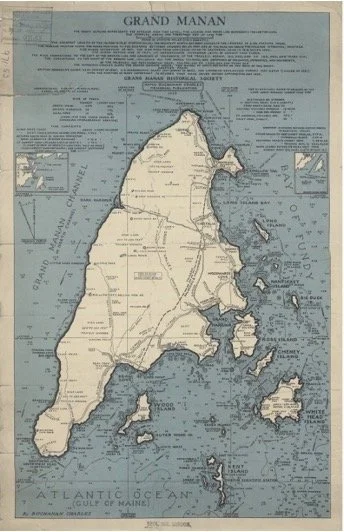
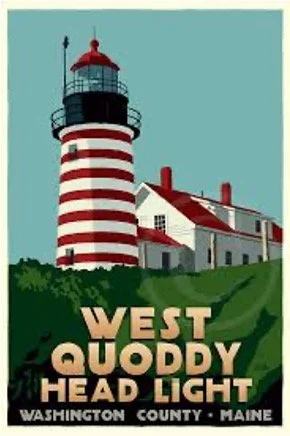
Driven by the famously giant tides in the Bay of Fundy, the water is violent and there have been hundreds of shipwrecks around the island. But the churning waters are also nutrient rich and the island, which is home to both the Sardine Museum and the Herring Hall of Fame, was the largest supplier of smoked herring in the world in the 19th Century.
By the time Charles Littlefield began construction on the building that would become LimeRock Inn, Grand Manan had become a destination for famous tourists and rusticators like Pulitzer Prize-winning Willa Cather and John James Audubon.
Since that time the population has more than doubled to 2,600 residents, but almost 90% of Grand Manans are third generation on the island or longer. Very few residents on the island come “from away”.
MATINICUS or “far-out island” in Abenaki, is the most remote year-round isle in Maine, 20 miles off Owls Head. It has a year-round population of ~50 people, a number unchanged since 1790. The island exemplifies the rugged grit of the people of Maine.
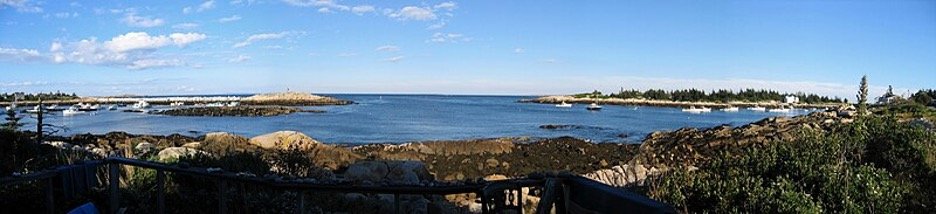
In 1750, Ebenezer Hall and his family became the island's first permanent settlers. They built a house, started fishing and farming, and claimed territorial rights. Hall burned the grass on nearby Green Island to produce hay, infuriating the Penobscots, who had seasonally used the islands for generations, fishing and seal hunting. The tribe wrote letters to Royal authorities in Boston warning, “if you don't remove him in two months, we shall be obliged to do it ourselves.” And so, they eventually did… four years later in 1757, after many warnings and a multi-day siege.
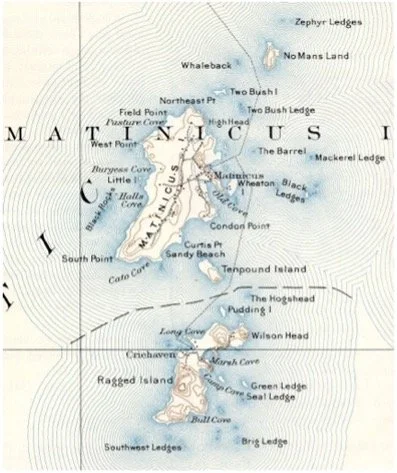
As a maritime community, the residents have long worked as sailors and fishermen. The early days of fishing for cod, mackerel, and herring have given way to lobstering, which continues as the dominant industry on the island today and has led to continued territorial disputes. In 2009, one island fisherman shot and wounded a fellow fisherman in a dispute over the locations of individual lobster-fishing rights.
Matinicus Library, founded in 2016, was featured by Smithsonian Magazine for buying books banned by other organizations in the United States. One library book that had not been banned, however, is Keep the Lights Burning, Abbie, which you can read in our own library. It’s a well-known children’s book and true story about a young girl who helps to keep the Matinicus lighthouse lamps lit during a tremendous storm in 1856 when her father had to travel 26 miles to Rockland for food and medicine.
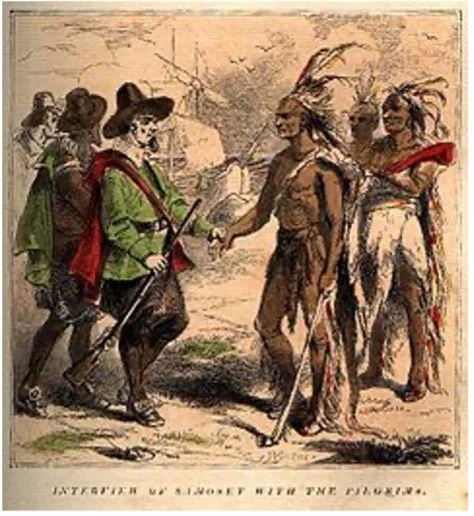
MONHEGAN was a British fishing camp where cod was harvested, dried, and shipped to Europe prior to the settlement of Plymouth Colony. Samoset, an Abenaki sagamore (chieftain), learned to speak English there from the fishermen and fur traders. On March 16, 1621, Samoset was the first Native American to make contact with the Pilgrims. He strode into their camp at Plymouth, said “Welcome, Englishmen”, and asked for a beer.
William Bradford wrote, “there presented himself a savage, which caused an alarm… he very boldly came all alone”.
“The wind beginning to rise a little, we cast a horseman's coat about him, for he was stark naked, only a leather about his waist.” Samoset described the carnage of disease brought by earlier explorers, “He told us the place where we now live is called Patuxet, and that about four years ago all the inhabitants died of an extraordinary plague, and there is neither man, woman, nor child remaining, as indeed we have found none, so as there is none to hinder our possession, or to lay claim unto it.”
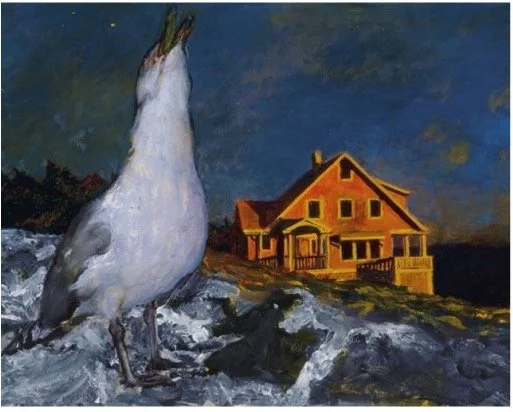
Today, Monhegan is the most famous island in Maine. The dramatic 150-foot cliffs at Blackhead, the highest along the New England coast, have drawn artists since the mid-19th century. By 1890, when 96 Limerock Street was being built, Monhegan was firmly established as the quintessential Maine artist community. Artists summered here fromAcadémie Julian in Paris, the New York School of Art, and the Pennsylvania Academy of the Fine Arts. Artists including Bellows, Hopper, Henri, Wyeth, and Kent would elevate American Art.
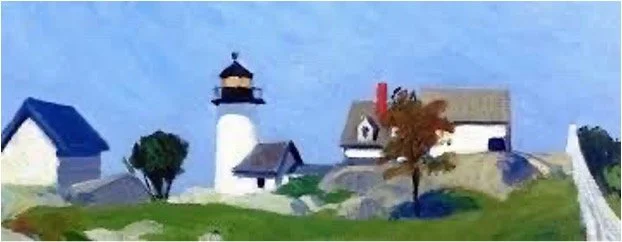
VINALHAVEN is a large island, 11 miles off Rockland harbor. On a clear, breezy day you can look out from the breakwater and see three windmills spinning – powering the Fox Island Electric Coop which is the largest community wind facility on the east coast.
Despite its size, beauty, and proximity to the mainland, Vinalhaven is not a common tourist destination. The population more than doubles in the summer to a few thousand people, but it’s still a quaint fishing community as compared, for example, to Nantucket and Martha’s Vineyard which together swell to almost 300,000. Vinalhaven is the heart and soul of the lobster industry, with the second largest catch in the state. Almost 60% of workers are self-employed and a third of all jobs are tied to lobstering.
When Charley Littlefield lived on “Vinal Haven” in the 19th century*, fishing was important, but granite dominated employment and the economy.
It took industrious men to quarry the heavy stone, and one creative wheelwright invented a tactor-like granite hauling vehicle called a “galamander”.
It had levers which, when combined with a block and tackle, could lift and transport large pieces of stone, underslung, between the wheels.
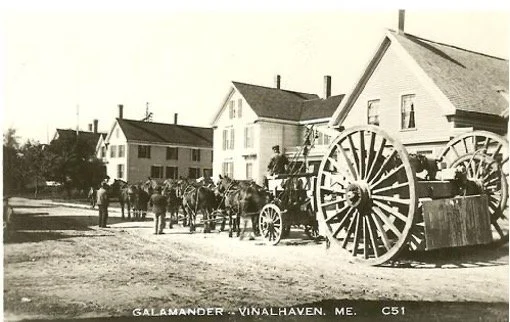
According to the National Historic Register, the precise history of its development and use is uncertain, but there is “a strong tradition that the vehicle originated on Vinalhaven… One local historian has, in fact, given the credit of conceiving the galamander to Rev. W. H. Littlefield who, in addition to his pastoral duties, was apparently employed as a wheelwright.”
Given Charley’s training as a millwright, it’s likely that he played a role in the design as well. Although use was widespread a century ago, only two restored examples still exist today, and one is on East Main Street in Vinalhaven.
*Originally one word in 1789, the Postal Service changed the Post Office name from South Vinalhaven to Carver's Harbor in 1850, to Vinal Haven in 1879 and back to Vinalhaven in 1925.
NORTH HAVEN, the epicenter of sailing and wealthy summer rusticating, is renowned for the Fox Islands Thoroughfare, a one-of-a-kind natural east-west passage between Vinalhaven and North Haven. However, it should probably be called Governors Island.
Leverett Saltonstall was Governor of Massachusetts from 1939 until 1945 and went on to serve in the U. S. Senate for 22 years. With a fresh breeze and a full swing, he might have put a golf ball onto the porch of the cottage across the way that was owned by Pierre S. Du Pont IV, Governor of Delaware in the 1970s.
Not to be outdone by these Republicans, Democrat Ned Lamont was elected Governor of Connecticut in 2019, the same year that fellow Democrat Janet Mills was elected Governor of Maine. While Mills doesn’t own property on the island, she’s a frequent visitor so we’ll include her to keep Maine “purple”.
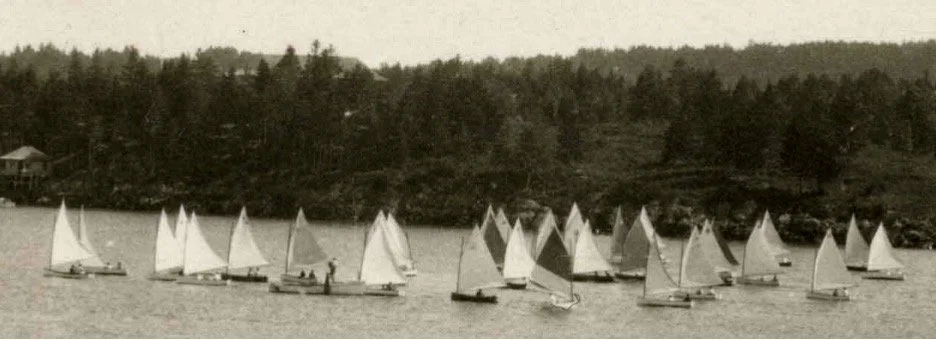
The Saltonstall, Du Pont, and Lamont families have been sailing together at the North Haven Casino “Yacht Club” for generations in their North Haven Dinghies, Herreshoffs, and Ensigns. According to U.S. Sailing, “The North Haven Dinghy is the oldest continually raced one-design sailboat in America. In 1887, in the waters of Penobscot Bay, Maine, a girl named Ellen beat two fellows named Charles - all racing boats of identical design - and these Dinghies have been competitively sailed each summer ever since.” In 1888, James Osman Brown began building dinghies, adding to the original 3-boat fleet. This launched the J. O. Brown & Son’s boatyard, just beside the Casino, that is still run by the Brown family.
The Dinghy has a simple elegance that makes them easy to sail… but tough to master.
SEGUIN light was built in 1795 and it is the highest and 2nd oldest lighthouse in Maine. A visit to Seguin is a journey to a place where time stands still.
This uninhabited, 64-acre isle is 2½ miles off Popham beach, accessible by private “ferries” that may require wading through the surf across slick granite.
The light was ordered by George Washington to protect ships crossing one of the foggiest areas on the East Coast. In 1907, Seguin set a record for 2,374 hours of fog… 99 straight days of fog!
Also known for having rough seas, early settlers said that Seguin is a French corruption of the Abenaki Sutquin: “place where the sea vomits”.
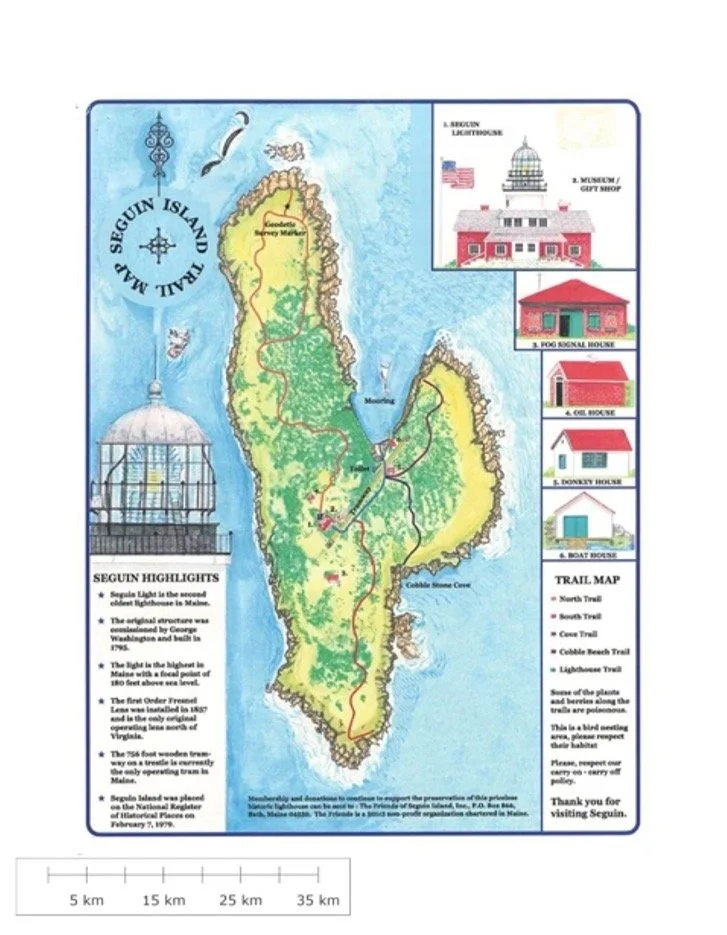
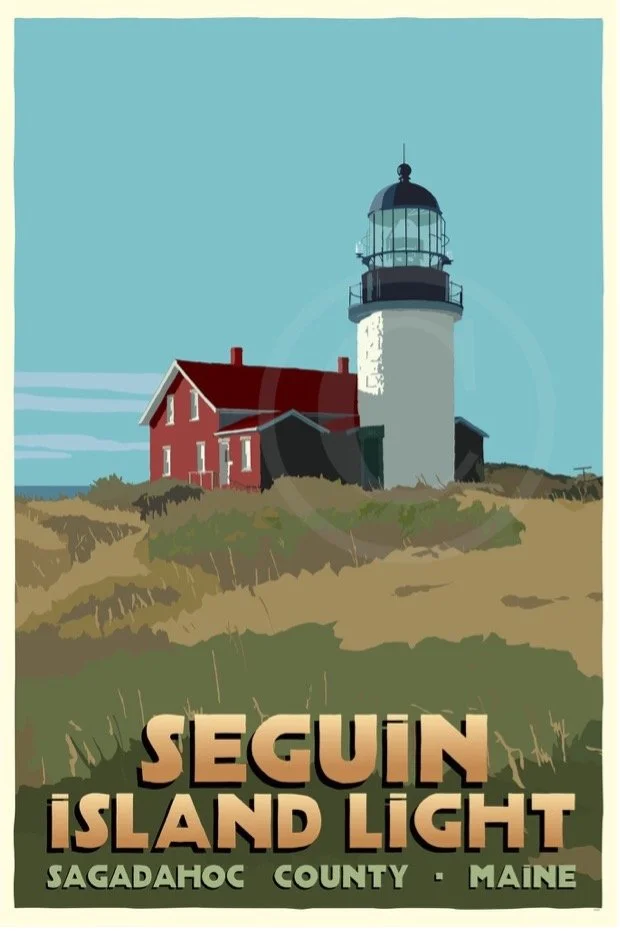
The beacon is infamous for paranormal activity witnessed by keepers, tourists, and mariners alike. It’s reputed to be the most haunted lighthouse in Maine.
The first lightkeeper, from 1786 to 1802, was Major John Polereczky, a Hungarian Count who died penniless on the island. The ghost of the “Old Captain” has been reported to climb the tower staircase and haunt the keepers who came after him.
Other stories may be too scary to share, so we leave those for you to explore.
DAMARISCOVE is an uninhabited 210-acre island between the outlets of the Sheepscot and Damariscotta Rivers, about 5 nautical miles off Boothbay Harbor.
The history books tell us that Plymouth was the earliest permanent European settlement in North America. But in 1621, when the Pilgrims ran out of food in their first winter, they turned to the people of Damariscove Island for help. These fishermen had been fishing the Maine waters since 1604 and had a 30-vessel fleet. They gave food to the Pilgrims and saved the Plymouth Colony from collapse, changing the course of history. Damariscove islanders continued to help and protect settlers and sailors through the 17th, 18th, 19th, and 20th centuries.
The island had such a thriving community in the late 1600s that the island public house was awarded the first liquor license in Lincoln County! A Lifesaving Station with an octagonal observation turret was built in 1897 and was manned year-round until 1960. In the early 1900s, Damariscove was home to fishing and farming families, hired hands, and U.S. Coast Guardsmen. In addition to the Lifesaving Station, there was a farmhouse and a barn with many farm animals, as well as several cottages, waterside shanties, and even a modest schoolhouse for nearly 20 children.
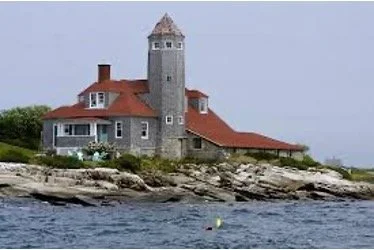
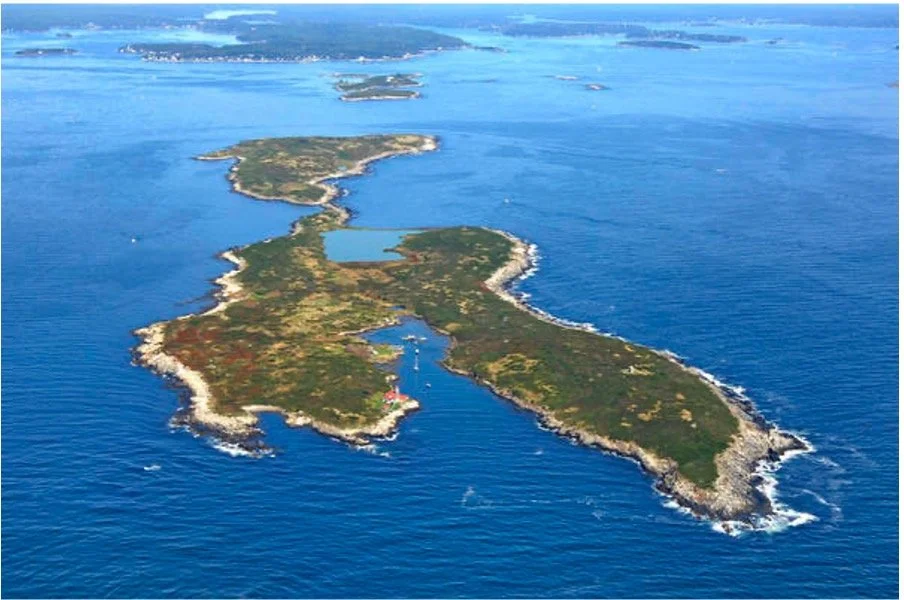
Today, little but a small museum and the turreted Lifesaving Station remain.
The station is now a privately owned seasonal residence listed on the National Register of Historic Places, but the grounds are controlled by the Boothbay Region Land Trust and open to the public.
As Bert would say, in the Stories from Down East, “you can’t get there from here”
…at least not without your own boat.
PETIT MANAN has patches of grass and wildflowers, but the soil is too shallow for trees. A lighthouse keeper “tried putting in a vegetable garden… we gave it up as hopeless… tried keeping a cow… you've never lived until you've shared a rowboat with a cow!”
In 1972, the light was automated and resident keepers were needed no more. When they left, the unintended consequences were profound.
There were ~1500 nesting terns on the island in 1970, but by the 1980’s there were none. The lighthouse keepers had been keeping predators of the tern away, like black-backed and herring gulls. Within a decade, the gulls had returned, wiping out the tern population.
In 1984, the U.S. Fish & Wildlife Service and the College of the Atlantic in Bar Harbor initiated a program to control the gulls and restore the terns. The results were immediate – within months there were 855 tern nests.
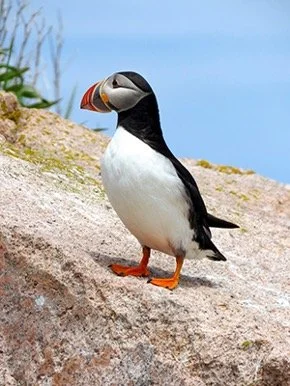
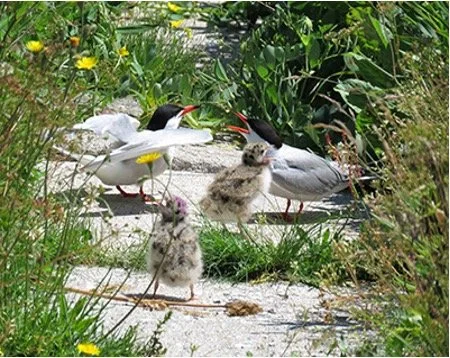
But then another surprising thing happened, the island welcomed an unexpected visitor…
In 1902, Maine’s last pair of Atlantic Puffins clung to existence on Matinicus Rock. The most adorable sea bird on the planet had been driven from Maine due to hunting, egg collecting, and sheep grazing.
In 1973, Steve Kress launched Project Puffin, relocating six chicks from New Foundland to Easter Egg Rock Island. Against all odds, the fledglings survived, the colony grew.
With a return of the terns in 1984, pairs of puffins began spontaneously nesting on Petit Manan, “likely because the presence of terns suggested that it would be a safe zone from gulls”